
How Turkish Towels Are Made: From Cotton Yarn to Traditional Peshtemal
Turkish towels are recognizable for their lightweight construction, woven patterns and distinctive fringed edges. But what actually makes a Turkish towel different, and how does a simple cotton yarn become the finished textile known as a peshtemal? The answer lies largely in the way the fabric is constructed. Unlike the thick looped surface associated with many conventional terry towels, traditional peshtemal-style towels use a flatter woven structure. This gives them their characteristic appearance, compact profile and distinctive textile texture. Let's look more closely at the elements behind a Turkish towel.
The Story Begins with Cotton Yarn
Cotton is one of the most important elements in many Turkish towels. Before weaving begins, yarns are prepared to create the foundation of the textile. The characteristics of the yarn, weave density and finishing process all influence how the final towel looks and feels. The result is quite different from the deep pile of a conventional terry towel. Instead, a Turkish cotton peshtemal has a visibly woven surface where the structure itself becomes part of the design.
The Weave Creates the Character
One of the most beautiful aspects of Turkish towels is that pattern doesn't always need to be printed onto the surface. It can be created directly through weaving. This is why you'll often see patterns such as:
- Herringbone
- Traditional stripes
- Fine linear designs
- Geometric details
- Contrasting woven borders
A herringbone Turkish towel, for example, uses a repeating V-shaped structure that creates visual movement across the fabric. Striped peshtemals offer a different appearance while maintaining the lightweight character associated with this type of textile.
Why Are Turkish Towels Lightweight?
The answer is primarily in their construction. Traditional peshtemal-style towels don't rely on the same thick looped pile used by standard terry towels. Their flatter woven structure creates a textile that can be folded into a relatively compact size. This characteristic is one reason Turkish towels have become popular beyond traditional hammam settings. They can be stored neatly in bathroom cabinets, stacked on open shelves or packed into luggage and beach bags without occupying excessive space.
Where Do the Tassels Come From?
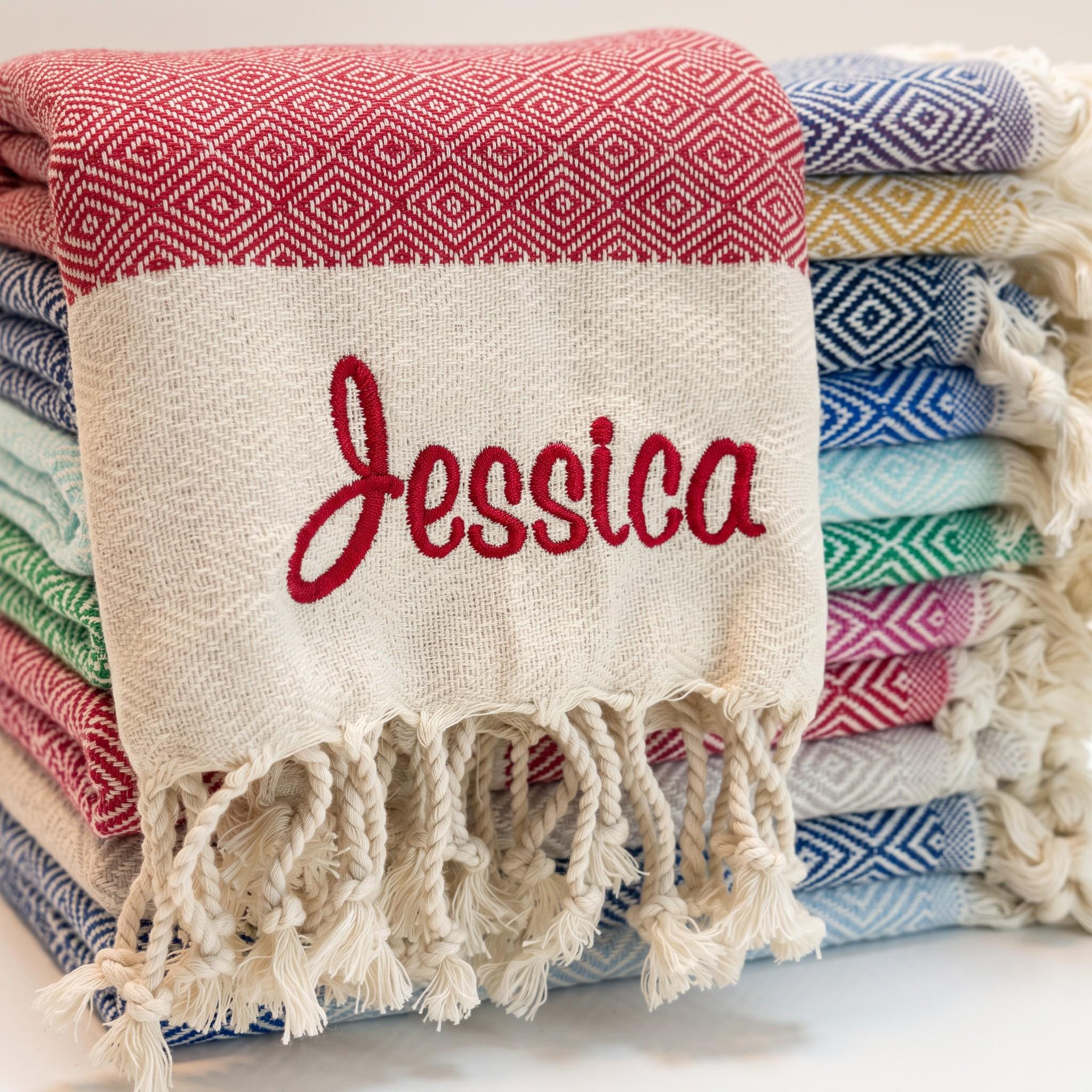
The fringed ends are one of the most recognizable features of a Turkish towel. Rather than being purely decorative, fringe is closely connected to the woven construction of the textile. The warp yarns extending beyond the main body of the fabric can be finished into twisted or knotted tassels. Today, those tassels have also become an important part of the peshtemal aesthetic. They give the towel a handcrafted-looking finishing detail that distinguishes it visually from an ordinary bath towel.
Color Changes the Entire Character of the Same Weave
One woven pattern can look dramatically different depending on its color. A gray or black herringbone towel can feel understated and contemporary, while mustard, red, pink or blue can make exactly the same type of weave much more expressive. This is one reason collections of Turkish cotton towels often include several colors of the same pattern. Customers can choose a shade that works with their bathroom, beach accessories or personal style without changing the fundamental textile design.
Embroidery Adds Another Layer
Traditional woven character can also be combined with modern embroidery. A name, initials, monogram or short text can be embroidered onto selected peshtemal designs, creating contrast between the woven background and stitched lettering. The result combines two different textile techniques: the structure and pattern created through weaving and the decorative detail added afterward through embroidery. This makes an embroidered Turkish towel especially interesting because the decoration isn't limited to the original woven design.
From Hammam Tradition to Modern Homes
Peshtemals have a strong association with Turkish bathing culture and the hammam tradition. Today, however, their use has expanded considerably. Modern Turkish towels can be found in bathrooms, spas, beach bags, pools, guest rooms and suitcases. Their colors and woven designs have also evolved to complement contemporary interiors and lifestyles. Yet many of the visual characteristics that make them recognizable—flat weaving, cotton texture, stripes or geometric patterns and fringed edges—continue to connect today's towels with a much older textile tradition.
Choosing a Turkish Towel Is Also Choosing a Textile
When shopping for a towel, it's easy to focus only on color. With a peshtemal, however, the weave itself is an important part of the product. Look closely at the herringbone pattern, stripes, fringe, cotton texture and finishing details. These elements determine much of the visual character of the towel. Whether you prefer a subtle neutral design or a colorful woven pattern, understanding how Turkish towels are constructed can help you appreciate the textile beyond its everyday function. Explore our collection of Turkish cotton peshtemals, herringbone towels, striped Turkish towels and embroidered designs to discover different interpretations of this traditional woven textile.